
Blog
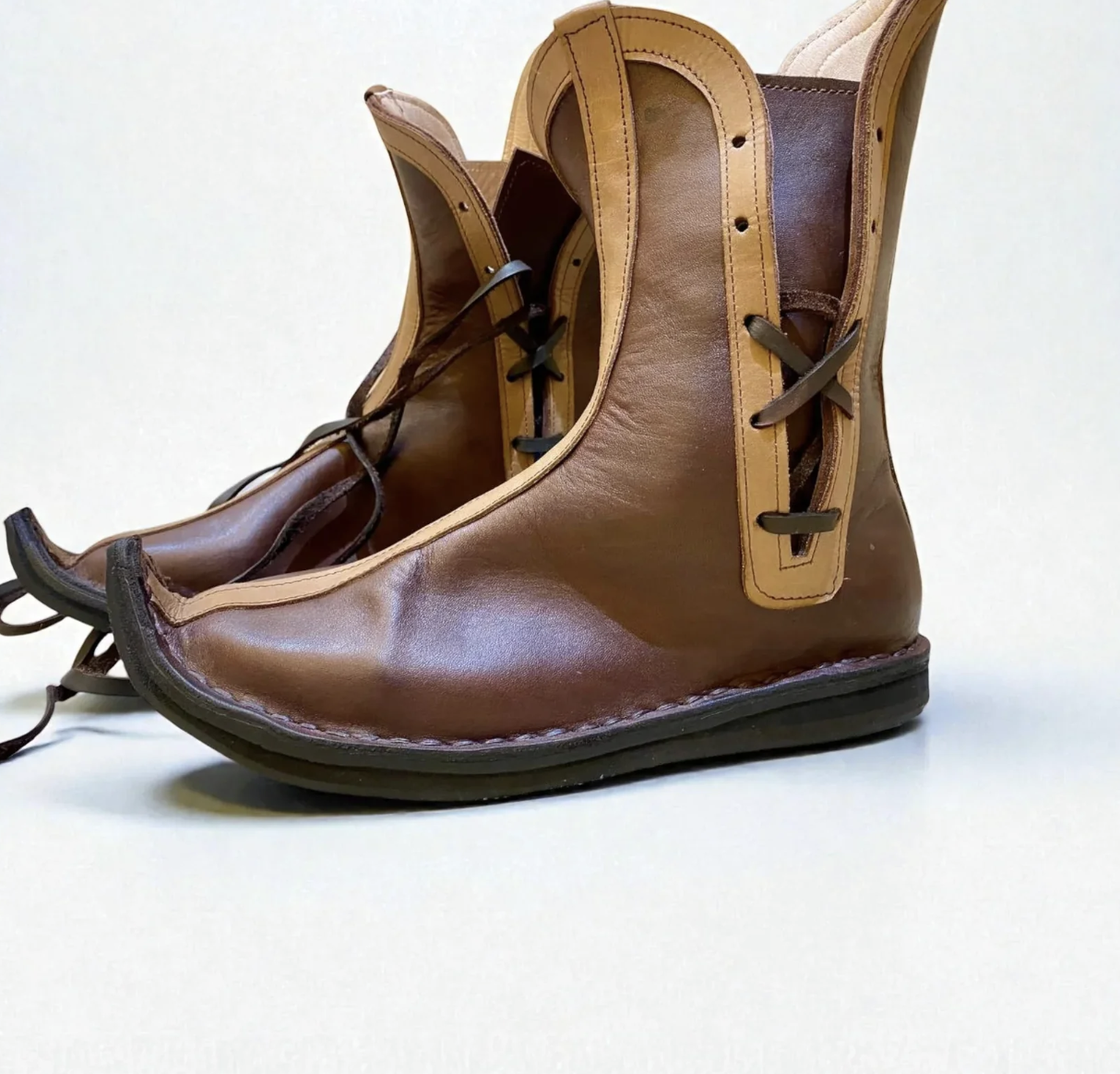
Viking Leather Boots
In This Historical Guide:
When we picture a Norse raider stepping off a longship, popular media often fills our imagination with heavy steel armor and massive fur capes. However, Hollywood frequently gets historical costuming completely wrong.
In reality, the Norse people were highly sophisticated tailors and cobblers. True Viking leather boots were masterworks of minimalist design, built dynamically to survive the unforgiving, wet terrains of Scandinavia.
They provided incredible agility during heavy movement. By understanding these authentic construction methods, reenactors can easily elevate their kits with historically accurate footwear.
The Hidden History of Authentic Viking Leather Boots
To truly appreciate historical footwear, we must examine archaeological data from the traditional Viking Age. Excavations from ancient trading hubs like Hedeby and York have unearthed beautifully preserved examples of original Norse footwear.
If you want to own authentic Viking leather boots, understanding traditional turnshoe construction is essential. Cobblers of the era would stitch the entire boot completely inside out using strong, flexible thread.
They would then carefully turn the boot right-side out when finished. This brilliant hidden-seam technique completely protected the structural stitching from being worn away by harsh rocks, mud, and gravel.
1. The Selection of Premium Cowhide Leather
An authentic Norse boot is only as reliable as the hide it is cut from. Traditional craftsmen building genuine Viking leather boots did not have access to modern plastic sealants or synthetic coatings.
Instead, they relied completely on robust, thick cowhide treated with natural vegetable elements. This organic tanning methodology leaves the natural grain of the leather fully intact.
The resulting material is highly breathable and extraordinarily durable. When you wear high-grade cowhide out into the elements, it naturally develops a deep, rugged patina that mass-produced factory shoes can never replicate.
2. Authentic Closures vs. Modern Zippers
Nothing ruins historical immersion faster than a glinting metal zipper or modern plastic eyelets. True Norse footwear relied on genius, low-profile closures that kept the footwear tightly secured to the foot during intensive tasks.
Most authentic designs utilized leather toggles or wrapped cord ties. These traditional closures allowed the wearer to quickly adjust the tightness around their ankles and calves.
This stopped trail debris, damp mud, and morning dew from sliding inside the footbed. It kept the warrior protected during a long march or an open-field skirmish.
3. Modern Evolution: Merging History with All-Day Support
Walking purely in a period-accurate flat sole is fantastic for historical accuracy. However, modern festival environments pose a serious physical challenge to your feet.
Walking 15,000+ steps a day across hard gravel and packed dirt can lead to severe foot fatigue by mid-afternoon. That is why elite modern craftsmanship must bridge the gap between eras.
When investing in high-quality Viking leather boots, you deserve total old-world character on the outside, paired with anatomically sound internal support hidden on the inside.
This allows you to maintain total historical authenticity while enjoying the modern structural cushioning your feet need to campaign comfortably from sunrise to sunset.
If you are looking to replace mass-produced costume shoes with rugged, heirloom-quality footwear, explore our complete selection of handmade medieval leather boots and find the perfect pair for your next journey.