
Blog
Aurelian Path Journal
Women’s Medieval Ranger Boots: Outfit Ideas, Fit & Sizing Guide
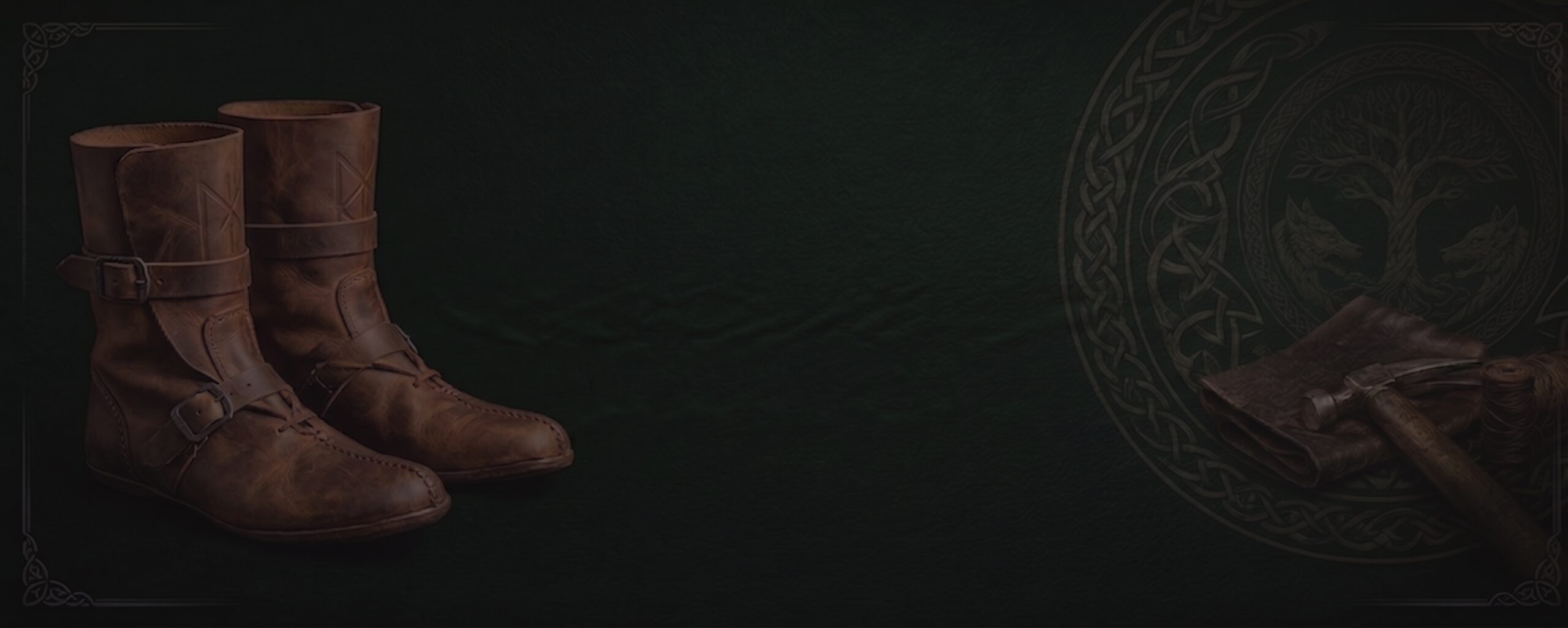
A convincing medieval ranger outfit begins with layers, practical accessories and, above all, footwear that suits your character and your feet. Whether you are planning a woodland LARP character, a Renaissance fair costume or a fantasy-inspired adventure, your boots need to work with your clothing and the ground you will walk on.
For women shopping for medieval ranger boots, the biggest questions are often about boot height, wide feet, calf fit and what actually looks right with a cloak or tunic. This guide focuses on those decisions, rather than asking you to choose a size from a photo alone.
What boots suit a medieval ranger outfit?
For most fantasy ranger looks, brown or dark-brown leather boots with a relatively simple silhouette are a versatile starting point. Natural grain, understated closures and a shape that works under trousers help create a travelled, woodland character. Black leather can work especially well for a shadow ranger, rogue or darker fantasy kit.
The right height depends on how you wear the rest of your outfit. If leg wraps, gaiters or patterned stockings are an important part of the costume, low medieval shoes may show those details better than tall boots. If your outfit uses a cloak, belt pouches and long trousers, ankle- or mid-calf boots may give you the balance you want.
Build the outfit from the ground up
- Footwear: Start with the pair that fits your feet and your event terrain; match its leather color to your belt or pouch rather than trying to match every accessory exactly.
- Trousers or leggings: Choose comfortable layers that do not bunch uncomfortably inside the shaft of the boot.
- Tunic and outer layer: A linen-look tunic, vest or simple cloak helps establish the ranger silhouette without excessive decoration.
- Utility details: Add a belt, pouch and suitable accessories that comply with your event’s rules.
- Weather plan: Check the forecast, ground conditions and any event restrictions before choosing soles or adding gaiters.
Choosing boots when you have wide feet
A label such as US 9W is useful, but it does not reveal the exact shape of your foot or the room inside a handmade boot. Two pairs marked with the same size can feel different at the toe box, instep and heel. The best starting point is to measure your actual feet rather than sizing up automatically.
- Stand on a sheet of paper in the socks you plan to wear, with your weight evenly distributed.
- Measure heel to longest toe for both feet and use the longer measurement.
- Measure around or across the widest part of the forefoot, following the maker’s instructions.
- Tell the maker your usual size, whether you use a wide fitting, and any specific pressure points.
- Ask for fit guidance before ordering; do not assume a longer boot will also be wider in the correct places.
If your feet are unusually wide, narrow at the heel or different lengths, ask whether the exact style offers a custom-fit option. A helpful seller should be able to explain what measurements it needs and what can be adjusted.
What if your calves measure 18 inches?
If your calf circumference is about 18 inches (46 cm), measure the actual point where the boot shaft would end—not just the widest part of your calf. A short boot may end below that point, while a tall boot may cross it. Even two mid-calf designs can have very different openings.
Before choosing tall ranger boots, ask for the shaft height, opening circumference and closure adjustability of the specific style. Make the measurement while wearing any trousers or leg layers that will sit inside the boots. Lace-up designs may offer flexibility, but laces do not guarantee that a boot will accommodate every calf measurement.
If a tall shaft feels restrictive, consider ankle boots, lower medieval shoes or footwear worn beneath separate gaiters. That can preserve a ranger look without forcing a calf fit that does not work.
Leather boots or medieval shoes: which is better for LARP?
Choose boots when:
- You want a stronger ranger, traveller or adventurer silhouette.
- Your trousers meet the top of the footwear neatly.
- You have confirmed the shaft fits your calves and any extra layers.
Choose lower shoes when:
- You want to show leg wraps, stockings or a detailed trouser hem.
- You prefer not to have a boot shaft around your calves.
- Your character design is closer to a village traveller, scout or lightly equipped adventurer.
Neither option is automatically more historically accurate. Most styles sold for fantasy LARP are historically inspired, not exact reproductions of a particular century or archaeological find. Check your event’s costume requirements if authenticity matters.
A handmade footwear option from Old Realm Leather
If you want to compare another handcrafted style, our related footwear store Old Realm Leather offers leather medieval boots made for LARP, Renaissance fairs and historical-inspired outfits. The product page includes sizing help and information about made-to-order production. Compare its shaft shape and closures with your intended ranger outfit before selecting a size.
For an outfit featuring wraps or visible stockings, the store also has lower-profile medieval leather shoes. Check the current product details, available options and delivery estimates directly before ordering, particularly if you have a fixed event date.
Practical comfort checks before your event
- Test indoors first: Try footwear on with your event socks and check heel movement, toe room and pressure at the instep.
- Check the ground: Mud, grass, pavement and uneven paths may need different levels of grip; examine the actual sole shown on the product.
- Plan for rain: Ask for leather-care guidance and do not assume every leather boot is waterproof.
- Leave time: Handmade-to-order production plus international delivery can take longer than buying a ready-to-ship pair.
- Respect event rules: Some venues have rules for footwear, costume props and slippery surfaces.
Frequently asked questions
Can women wear men’s medieval boots?
Yes, provided the actual dimensions and shape suit your feet. A men’s or unisex size number alone is not enough; use measurements and the seller’s guidance.
Should I size up for thick socks?
Not automatically. Measure while wearing the socks you intend to use and ask the maker how the particular boot fits. Excess length can create heel slip without solving a width issue.
Do ranger boots have to be brown?
No. Brown leather is a flexible choice for woodland outfits, while black, grey and other darker tones can suit a rogue or shadow-ranger character.
What is the best medieval ranger boot for wide calves?
The best choice is one whose shaft circumference matches your leg at the height the shaft reaches. If those measurements are unavailable, lower footwear can be easier to evaluate than guessing with a tall boot.
Final checklist for your ranger kit
Choose your ranger character first, then check foot length and width, boot opening measurements, event surfaces and delivery timing. Style matters, but a correctly fitting pair lets you enjoy the day instead of thinking about your boots at every step.
For a broader overview of footwear styles, read Aurelian Path’s guide to choosing Ren Faire boots, or browse our medieval leather boots collection for more outfit inspiration.
Handmade historical footwear
Found the Style You Want?
Explore the current footwear collections and check your measurements before choosing a size.
Keep reading
 Ren Faire Boots Order-By Calendar: Plan Your Event Season