
Blog
Aurelian Path Journal
SCA Footwear Guide: Choosing Shoes and Boots for Reenactment
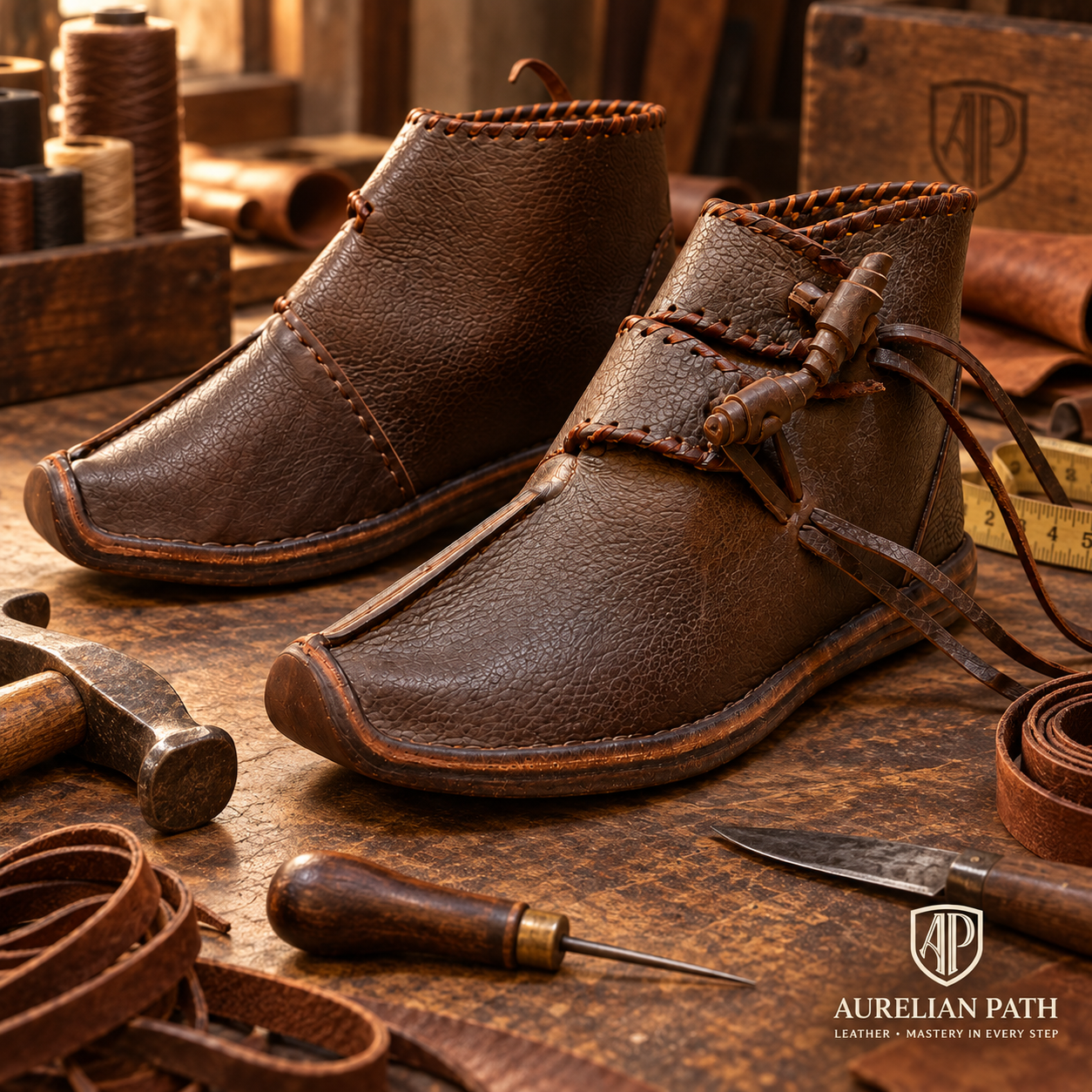
Shopping for SCA footwear requires two separate questions: does the shoe visually suit your chosen place and period, and will it work for the activity and site where you plan to wear it? A leather shoe advertised as ‘medieval’ is not automatically accurate for every century or appropriate for every type of event.
This guide is for newcomers comparing period-inspired shoes and boots. It is not a substitute for the rules of your specific event, kingdom, group or activity; those should always come first.
Start with the era and persona, not the store category
Choose the culture, region and broad period your clothing represents. Footwear shapes, materials and fastening methods varied over time. A fantasy boot designed for a ranger may look excellent for LARP but be a poor visual match for a narrowly researched historical impression. Compare references from museums, reputable research publications and knowledgeable reenactors before treating a design as a reconstruction.
What does ‘period-inspired’ really mean?
It means the footwear borrows visible historical features without necessarily reproducing an identified surviving shoe. Modern comfort decisions, commercial sizing, tread and reinforcements may be present. That is not always a problem; it depends on the purpose of your clothing and the authenticity expectations of your group. Sellers should be clear about what is known and what is an aesthetic interpretation.
Shoes or boots: choose the appropriate silhouette
Low leather shoes can complement leg wraps, hose and many civilian-inspired outfits. For a practical costume comparison, see medieval shoes versus boots for LARP. Taller boots create a stronger profile and may be favored for some practical settings or characters, but should not be assumed typical for all medieval people. Look at the full outfit rather than buying the most dramatic item first.
- Check whether you need visible period construction or just a compatible overall appearance.
- Ask whether modern-looking soles or closures are acceptable.
- Compare the shoe opening with trousers, hose and leg-wrap layers.
- Consider how much walking or standing the day involves.
- Ask event organizers about requirements for armored activities or other specialized participation.
Choosing a sole for the venue
Modern venues introduce asphalt, wet grass, polished flooring and changing weather that historical footwear may not have been designed around. The friction of a particular sole depends on its material, surface and condition. There is no universal ‘reenactment-safe’ sole. If the activity involves safety rules or protective footwear, follow the event’s specific requirements rather than a generic retailer description.
Sizing when you cannot try on the pair
Measure the length and width of both feet while standing, in the socks or hose you plan to use. Ask about the last shape, instep, sole and any maker-specific sizing allowances. A converted modern size does not guarantee that the shoe will fit like your everyday sneakers. Leave time to evaluate it indoors before attending an event.
An example of period-inspired footwear
For a lower-profile comparison, look at Old Realm Leather’s medieval leather shoes. The styles are marketed for LARP, fairs, SCA and reenactment, but you should judge the exact product details against your group’s expectations. Aurelian Path and Old Realm Leather are related stores; this link is offered as a practical reference, not as proof of historical accuracy.
Your pre-purchase questions
- Which historical period is this design meant to evoke?
- Are the sole and closure appropriate for my event?
- Can the maker advise on my foot measurements?
- What is the real production and delivery timeline?
- What is the policy for exchanges on made-to-order footwear?
Do I need authentic turnshoes for SCA?
That depends on your impression, activity and group expectations. Do not assume there is one universal rule governing every event or participant. Ask your local organizers for guidance.
Can I use LARP boots at an SCA event?
Possibly, depending on the activity and local requirements. Fantasy styling and historical reconstruction are different goals, so check the details rather than relying on the label.
For another overview of reenactment style, read Aurelian Path’s historical leather craftsmanship article.
Handmade historical footwear
Found the Style You Want?
Explore the current footwear collections and check your measurements before choosing a size.
Keep reading
 Ren Faire Boots Order-By Calendar: Plan Your Event Season