
Blog
Aurelian Path Journal
Boots vs Shoes for LARP: Fit, Terrain and Costume Guide
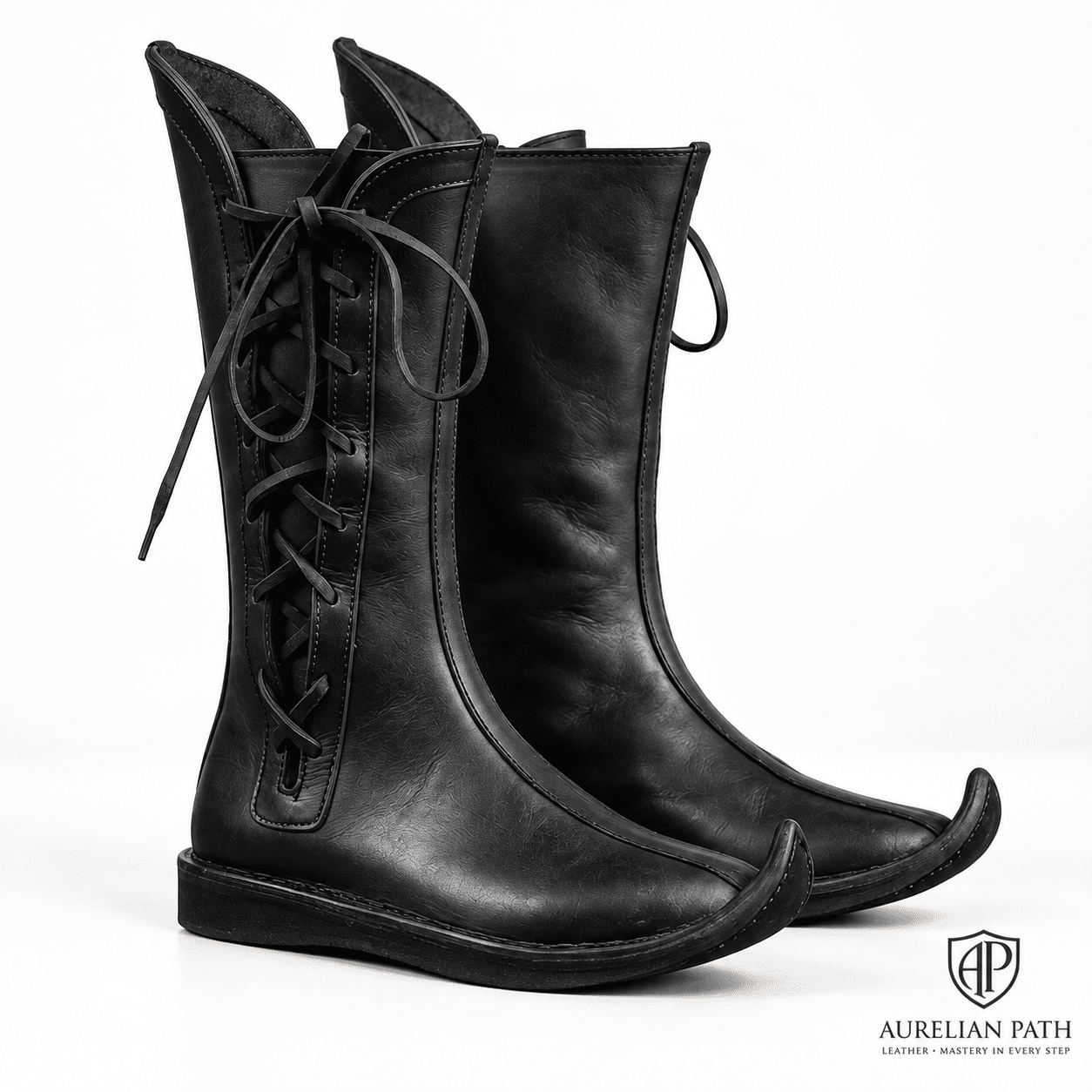
A medieval shoe and a medieval boot can both complete a LARP outfit, but each creates a different silhouette and solves a different wardrobe problem. A low leather shoe exposes stockings and leg wraps. A taller boot makes the lower half of a traveler, ranger or adventurer costume feel more substantial. Neither is automatically more comfortable or more historically appropriate.
Boots vs shoes for LARP: choose by activity
When comparing boots vs shoes for LARP, separate three decisions: the character silhouette, the fit and the demands of the event. A taller shaft changes coverage and appearance, but it is not proof of support, protection or traction.
| Your priority | Option to consider | Check first |
|---|---|---|
| Visible hose or leg wraps | Lower shoes | Heel security, closure and hem clearance |
| Covered lower-leg silhouette | Tall boots | Shaft height and circumference over trousers |
| Wide calves | Lower shoes or confirmed custom shaft | Actual measurements rather than adjustment claims |
| Outdoor active game | Footwear meeting event requirements | Terrain, weather, outsole and organizer’s rules |
Compare Aurelian Path’s two silhouettes
See our Medieval Shoes for a low profile and our Ren Faire and LARP Leather Boots for a tall black leather option. Inspect each listing separately: suitability cannot be inferred from the category name.
Rehearse the outfit before the game
Walk and sit with the trousers, socks and accessories you will wear. Avoid loose wraps or hems that catch underfoot. If the footwear remains uncomfortable during a brief trial, resolve the issue before an active session rather than expecting the event itself to break it in.
Read Viking shoes vs turnshoes for construction terminology, and use the medieval boot sizing guide for both women’s and men’s fitting questions.
The useful question is not ‘Which is better?’ but ‘Which fits my character, clothing, feet and event setting?’ Use this comparison before committing to a made-to-order pair.
Visual differences you notice immediately
Low shoes create a lighter profile and make leg wraps, hose, socks or decorated trouser hems visible. They pair naturally with villager, merchant, craftsperson and some Viking-inspired clothing. Boots cover more of the lower leg and often look deliberate beside trousers, layered tunics, cloaks and travel belts. A fantasy ranger costume may benefit from a mid-calf boot, while a bard with bright stockings might look more complete in simple shoes.
Side-by-side buying comparison
- Low medieval shoes: easier to show leg wraps; no tall shaft to measure; often visually understated.
- Ankle boots: a bridge between shoe and boot styling; useful under long trousers.
- Mid-calf boots: strong traveler or ranger silhouette; calf opening becomes important.
- Tall boots: striking costume proportions; need careful shaft measurement and clothing compatibility.
Comfort comes from fit, not boot height alone
A low shoe can be uncomfortable if its toe box is narrow or heel loose. A well-fitting boot can be pleasant for extended wear, but a restrictive shaft or poorly placed seam can become irritating. Measure your feet in the socks you intend to use, follow the maker’s size chart, and consider how your feet tend to change over a long event day.
For anyone who struggles with tall boot closures, lower footwear removes one fit problem without necessarily requiring you to abandon the desired character. Separate gaiters, leg wraps or boot-like costume cuffs can create detail above the shoe; make sure those accessories are secure and safe to walk in.
Check terrain and soles separately
Do not infer traction from the amount of leather covering your ankle. A low shoe with a suitable sole may perform better on a given surface than a tall boot with a smooth sole, or vice versa. Inspect actual product photos and specifications. If you will walk in rain, on uneven trails or during an active game, account for the conditions and follow event footwear requirements.
Which works for a Viking-inspired outfit?
Many Norse-inspired fantasy looks pair low leather shoes with leg wraps or loose trousers. Others use higher ankle or calf footwear for a more dramatic interpretation. If historical precision is important, consult period-specific evidence instead of accepting every product labeled ‘Viking’ as authentic. Our SCA footwear guide explains how to approach period-inspired choices.
Which looks right for fantasy classes?
- Ranger or scout: ankle or mid-calf boots with practical-looking layers.
- Merchant or village artisan: low shoes with hose or straight trousers.
- Bard: decorative stockings with understated footwear.
- Warrior: consider clothing, protective rules and actual activity before selecting footwear.
- Wizard or healer: either option can work; long robes may hide most of the shaft.
Compare a real pair before purchasing
For a lower-profile option, compare handmade medieval shoes from Old Realm Leather; to see how a taller silhouette changes an outfit, look at Aurelian Path’s guide to Ren Faire boots. Select according to your measurements and desired layers, not just by the category name. The stores are related, and this comparison is intended as practical shopping context.
Final decision test
Lay out your whole costume, including trousers and socks. Decide whether you want the lower leg visible or covered, measure feet and calf if necessary, check the exact sole and clarify your event rules. That five-minute exercise will often tell you more than browsing dozens of individual product photos.
Are medieval shoes too plain for LARP?
Not at all. The simplest footwear can make layered clothing, leather belts and a character’s accessories feel more coherent.
Are boots always warmer?
Not necessarily. Socks, leather thickness, lining, ventilation, activity and weather all affect warmth. Shaft height by itself is not an accurate warmth rating.
Handmade historical footwear
Found the Style You Want?
Explore the current footwear collections and check your measurements before choosing a size.
Keep reading
 Ren Faire Boots Order-By Calendar: Plan Your Event Season