
Blog
Aurelian Path Journal
How to Care for Handmade Leather Boots: Cleaning and Storage
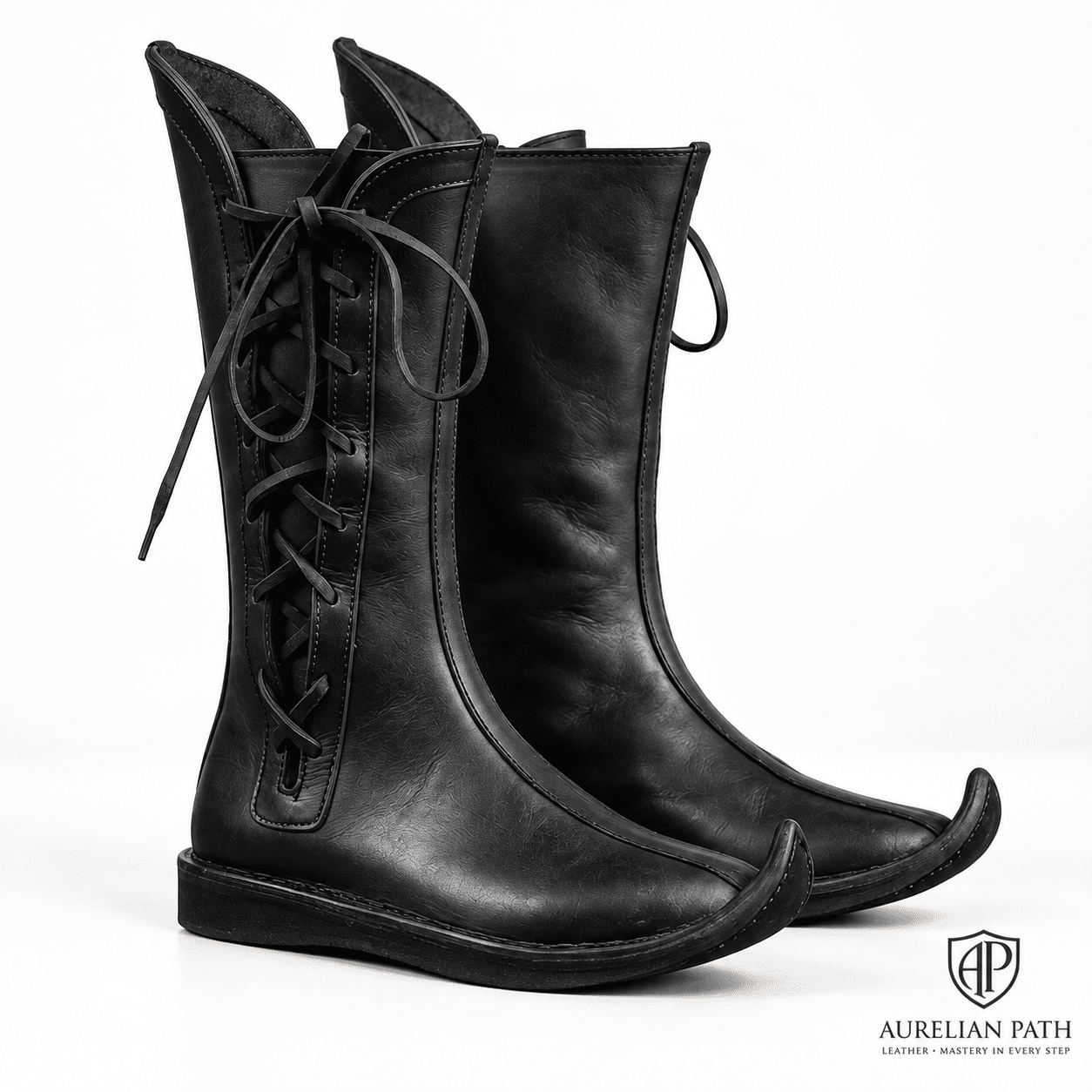
Handmade leather boots are an investment in your costume, and what happens after the event is as important as what happens during it. Grass, dust, mud, sweat and moisture can affect leather and stitching over time. Good care is usually simple: remove dirt, dry the boots gently, use products suitable for the specific leather and store them where air can circulate.
How to care for handmade leather boots between events
Knowing how to care for handmade leather boots means matching the routine to the actual leather finish. Check the maker’s instructions first. There is no universal oil, cleaner or conditioning schedule suitable for every pair.
| When | Action |
|---|---|
| After a dusty event | Gently remove loose dirt using a suitable soft brush |
| After wet wear | Open the boots and let them dry naturally away from heat |
| Before treatment | Confirm finish compatibility and test a hidden patch |
| Before storage | Check inside dryness, seams, fastenings and sole condition |
| Before next season | Inspect and test fit before the first full event day |
Do not use conditioner as a fit repair
Extra oil will not correct insufficient length or guarantee more forefoot room. If the boots pinch, use the wide-feet fitting checklist and ask about the shape. Apply a treatment only when it is appropriate for the leather, not to force a size change.
Prepare your next pair for repeat use
Our Ren Faire and LARP Leather Boots use cowhide uppers; confirm the exact finish and recommended products before treatment. Keep hardware and seams free of grit, and arrange repairs before a closure or sole problem becomes worse.
For a new pair, read how to break in medieval leather boots. Before the next season, use the event-season order-by calendar to plan fitting checks and any replacement order.
The correct method depends on the material and finish. Smooth finished leather, suede, nubuck, oiled leather and decorative dyed leather are not interchangeable. When in doubt, follow the maker’s directions and test any product on an inconspicuous patch first.
After every event: the five-minute routine
Let the footwear cool and air out. Brush loose dry dust with a soft brush, then remove remaining surface dirt using a slightly damp cloth if appropriate for the leather finish. Pay attention to seams, welt areas and the line where the upper meets the sole. Open laces and tongues so trapped moisture can escape. Allow the boots to dry completely before putting them in a closed box or bag.
- Remove loose dirt from soles and upper surfaces.
- Air out the lining and remove insoles if the design allows.
- Do not leave muddy boots sealed in a costume trunk.
- Check stitching, fasteners and soles for early wear.
- Store only when the leather is dry to the touch and inside.
How to clean dried mud safely
Wait until heavy mud has dried enough to brush away without grinding grit into the leather. Use a soft brush and work gently. On suitable smooth leather, a damp cloth can remove what remains. Avoid soaking the whole boot and do not scrub delicate dyed or suede finishes with an abrasive brush. If a dedicated leather cleaner is needed, follow its instructions and avoid mixing multiple chemicals.
When should you condition the leather?
Conditioning can help some smooth leathers when they begin to feel dry, but more product is not better. Heavy oils may darken the color, soften certain constructions or affect adhesives and stitching finishes. Choose a conditioner compatible with the leather type and color, test a small hidden area and apply sparingly. If the boot is already supple and has a specialty finish, the maker may recommend no conditioner at all.
Drying wet boots without damage
Air-dry at room temperature, away from radiators, direct flames, hair dryers and prolonged intense sunlight. High heat can dry out and distort leather. Stuffing boots loosely with plain absorbent paper may help maintain shape and absorb moisture; replace the paper if it becomes damp. Avoid tight packing that stretches the toe shape.
Water resistance is not guaranteed
Leather is not automatically waterproof. Treatments may improve resistance to light moisture on some finishes, but they do not turn every sewn boot into a sealed waterproof boot. Choose a compatible treatment only after checking the maker’s guidance, and do not rely on it for prolonged heavy rain or standing water. Keep a backup footwear plan for wet LARP events.
Storage between Renaissance fairs
Keep footwear in a cool, dry, ventilated place away from direct sunlight. Loose paper or shoe trees designed for the boot shape can help maintain form. Store boots upright when possible rather than folding the shafts under heavy costume items. Check them periodically for unusual odor, mildew or cracking, especially if they have been stored for months.
Know when to visit a repair professional
Separated soles, failing seams, worn heel edges or damaged closures are best inspected by someone who works with footwear construction. To compare sole materials before a new purchase, read our LARP boot soles guide. Avoid applying random glues before learning how the original sole is attached. The repairability of a particular boot depends on its materials and method of construction.
Handmade boot example
Before treating a new pair, check the materials and care information for the exact design. The leather on handmade medieval boots from Old Realm Leather is described as full-grain cowhide, but closures, finishes and construction details should still be confirmed on the listing or with the seller. Any leather-care product should be matched to the actual finish.
Can I dry leather boots overnight beside a heater?
Direct heat is risky because it can stiffen, shrink or deform leather. Gentle room-temperature air drying is a better default, even if it takes longer.
How often should medieval boots be conditioned?
There is no reliable universal calendar. Consider the leather finish, climate, use and maker’s guidance. Over-conditioning can create problems too.
For ideas on how leather construction affects appearance, see Aurelian Path’s craftsmanship overview.
Handmade historical footwear
Found the Style You Want?
Explore the current footwear collections and check your measurements before choosing a size.
Keep reading
 Ren Faire Boots Order-By Calendar: Plan Your Event Season