
Blog
Aurelian Path Journal
How to Break In Medieval Leather Boots: 7 Practical Steps
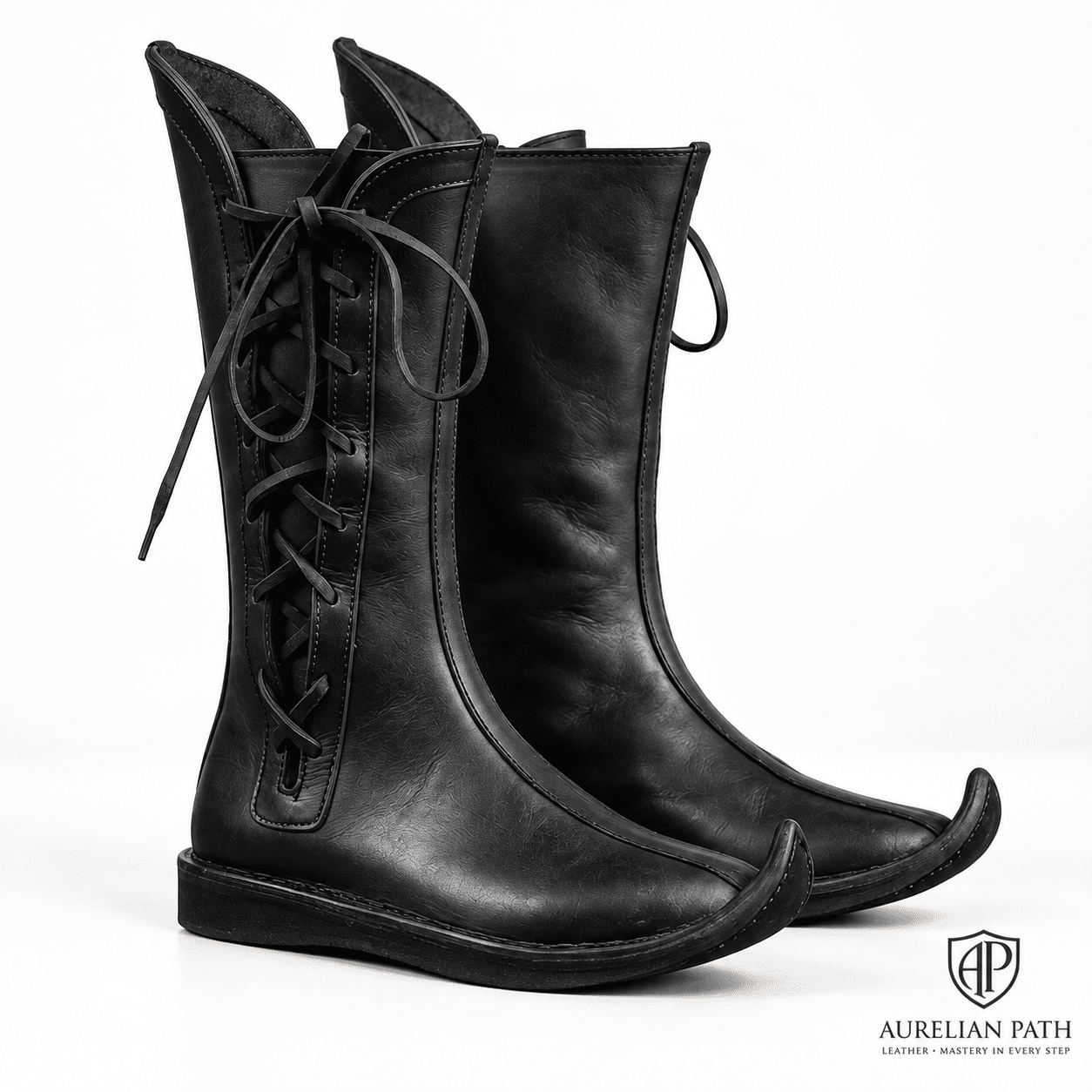
Learning how to break in medieval leather boots starts with a fit check, followed by short, comfortable periods of wear. Give new leather time to become more flexible before a Renaissance fair or LARP weekend. Never rely on stretching to fix boots that are too short, painfully narrow or restrictive around the calf.
Plan break-in time around your event date
A production estimate plus shipping time is not the whole event plan. Leave time to inspect the pair, confirm the fit and complete shorter comfortable wears. Use the Ren Faire boots order-by calendar to work backward from your event.
If pressure is concentrated across the forefoot, read medieval boots for wide feet rather than assuming more break-in will solve it. If you need women’s sizing help, the medieval boot sizing guide explains why measurements are more useful than a universal conversion.
What if the event is tomorrow?
Use footwear you have already tested if the new pair is not comfortable. Avoid last-minute heat, soaking or forced stretching. A costume plan should include backup footwear so you can change if comfort or ground conditions become a problem.
This guide helps you prepare your footwear before an event, identify fit problems early and avoid shortcuts that can damage the leather. If you are still choosing a pair, see our Ren Faire and LARP Leather Boots and compare your measurements before ordering.
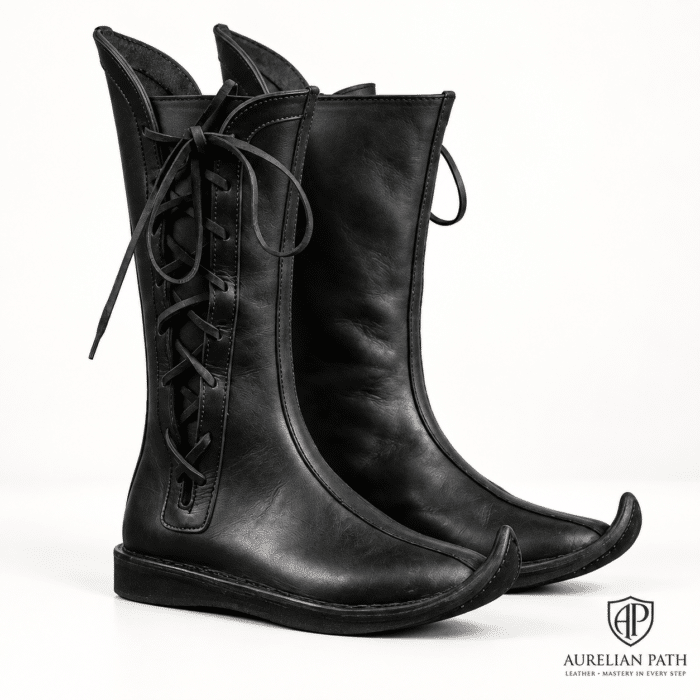
How to break in medieval leather boots without rushing
Think of breaking in as a series of checks rather than a deadline. The useful question is whether each wear feels comfortable, with no recurring pressure or rubbing. Different leather finishes, boot shapes and feet respond differently, so there is no reliable number of days that works for everyone.
1. Check the size before wearing them outdoors
Try both boots on a clean indoor surface. Stand, walk a little and check whether your toes have room to move. Your heel should feel controlled rather than sliding repeatedly, and the widest part of your foot should not feel squeezed. Check the shaft while standing and sitting, especially if you plan to tuck trousers inside.
Read our medieval boot sizing guide if your usual shoe size does not match your measurements. Keep the boots clean while deciding whether the size works, and check the current return terms before treating or altering them.
2. Use the socks you intend to wear
Test with your event socks from the beginning. A different sock thickness changes the space available inside the boot. Smooth wrinkles before putting the boot on, and check the toe seam. Adding extra socks to force a stretch can make an already tight fit worse.
3. Start with a brief indoor session
Walk indoors for a short period, then remove the boots and assess the fit. Extend later sessions only while the boots remain comfortable. Do not turn your first wear into an all-day trip. Footwear maker Clarks also recommends gradual wear and checking the size first in its general break-in guidance.
4. Adjust fastenings evenly
If your boots have adjustable laces or straps, distribute the tension rather than tightening one section hard. Secure the boot without compressing the foot or calf. Check again after sitting and walking, because costume layers can bunch behind the knee or around the ankle.
Do not pull fastenings beyond their usable range. If the shaft only closes with excessive force, send the seller your calf measurement and the thickness of the clothing you want to wear inside.
5. Rehearse your complete outfit
Try the boots with trousers, socks and any leg wraps you plan to use. Walk, sit, turn and use stairs carefully in a familiar setting. This shows whether costume layers catch on the boot or create pressure that was absent during your first fitting.
For costume layers, our medieval boots with leg wraps guide explains styling considerations. Avoid wrapping fabric tightly enough to restrict movement or circulation.
6. Increase walking only after the indoor fit works
Once you have accepted the fit and checked return eligibility, try a short outing close to home. Choose a straightforward route and bring another pair of shoes. Evaluate the actual outsole on the surfaces you expect to encounter; a medieval appearance does not establish grip on wet grass, stone or mud.
7. Recheck before the event
Inspect fastenings, seams and soles, and remove any grit from inside. Pack spare socks and familiar footwear. If the boots remain uncomfortable during ordinary walking, choose the backup pair for the event and resolve the fit separately.
Break-in mistakes to avoid
Do not soak your boots, put them in an oven, use direct heat or force them around an object to reshape them. Aggressive shortcuts can affect finishes, seams and construction. Ask about a conditioner suitable for the exact leather before applying one, and test any approved product in an inconspicuous area.
Stop wearing footwear that causes pain, numbness or repeated rubbing. Leather becoming softer does not guarantee that a poor fit will become suitable. For routine cleaning and storage after wear, follow our medieval leather boot care guide.
Frequently asked questions
How long does it take to break in medieval boots?
There is no fixed timetable. Assess comfort over several short wears rather than promising yourself the boots will fit by a particular day. Leave time before your event to resolve sizing questions.
Can I wear new boots straight to a Renaissance fair?
It is better to check them indoors and complete shorter comfortable wears first. A long event day gives you fewer opportunities to change footwear or investigate rubbing.
Will leather boots stretch in length?
Do not buy a short pair expecting useful extra length. If your toes hit the front, ask about a different size or shape instead of forcing a break-in.
Choose your fit before your event
Explore Aurelian Path’s black cowhide leather boots for Ren Faires and LARP. Check the current product details, size guide and production estimate, and ask about measurements before placing an order for a fixed event date.
Handmade historical footwear
Found the Style You Want?
Explore the current footwear collections and check your measurements before choosing a size.
Keep reading
 Ren Faire Boots Order-By Calendar: Plan Your Event Season