
Blog
Aurelian Path Journal
LARP Boots: A Practical Buyer’s Guide for Long Event Days
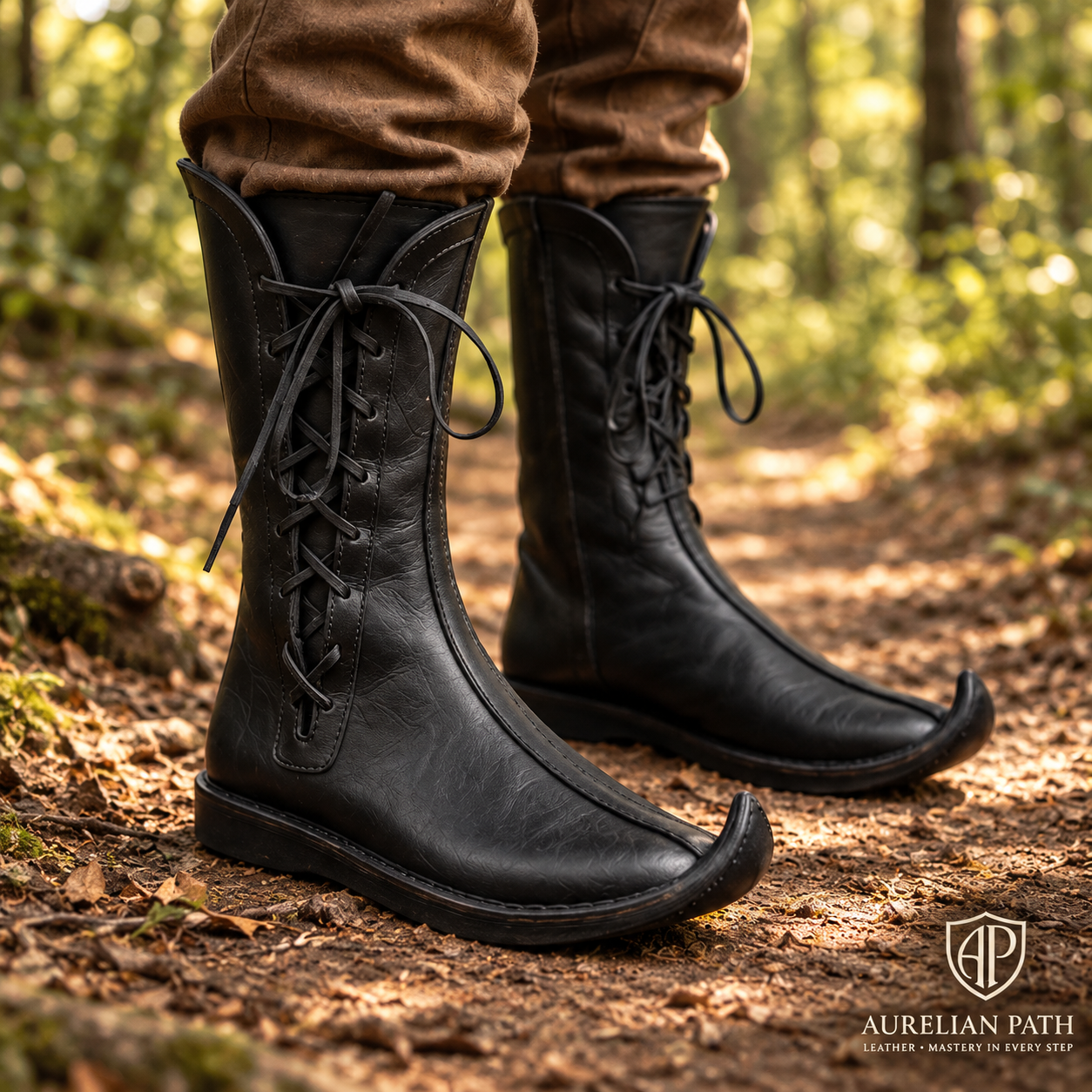
The best LARP boots are not simply the most dramatic pair in a photograph. A good pair should match your character, fit your feet, and work on the surfaces you will actually cross. A woodland ranger on a muddy campsite has different needs from a courtly mage attending an indoor evening event. Start with the setting, not the costume catalog.
This guide covers the buying decisions that matter most: foot measurements, boot height, sole grip, construction details, break-in time and how to avoid choosing a style that looks wonderful but becomes uncomfortable before lunch.
1. Decide what kind of LARP you are attending
For a one-day social gathering, a low-profile medieval shoe may suit your character and be easier to pack. Multi-day immersive events can involve hours of standing, changing weather and uneven paths. If there is staged fighting, read the event’s footwear and safety rules; costume appearance alone does not establish that a boot is suitable for physical activities.
- Indoor roleplay: prioritize an easy fit, quiet movement and clean soles permitted by the venue.
- Woodland events: inspect tread, water resistance and support; keep spare dry socks.
- Historical reenactment: ask the organizer which eras, materials or visible modern features are acceptable.
- Fantasy characters: use color, shaft height and closure style to reinforce the outfit without compromising fit.
2. Get fit right before choosing your size
A US or EU size is only a starting point because last shapes, toe boxes and insteps vary. Measure both feet while standing in the socks you intend to wear. For a step-by-step method, see our medieval boot sizing guide. Record heel-to-toe length and the widest part of your foot in centimeters, then use the size chart for the exact boot design. If the seller offers personal fit advice, include whether you typically wear wide sizes and where ordinary footwear feels tight.
A longer size is not always the solution to a wide forefoot: it may make the heel loose while pressure remains near the toes. If you need more room, ask whether the particular style can be made wider. For tall boots, measure your calf circumference at the shaft’s intended top edge rather than assuming your usual shoe size predicts shaft fit.
3. Compare leather, closures and boot height
Full-grain leather is a different experience from lightweight costume materials: it has natural markings, needs occasional care and can change in feel with wear. Still, ‘real leather’ does not tell you everything. Inspect the product photos for stitching, sole construction, lining and how the boot fastens. Toggles, laces and straps offer different ranges of adjustment; the actual opening and instep measurements matter more than the visual style.
Ankle boots can work with gaiters or leg wraps, while mid-calf boots create a stronger ranger or traveler silhouette. Tall shafts can look striking but are harder to size, especially over layered trousers. Match the boot to the clothing you already own so hems do not bunch around the ankles.
4. Soles matter more than a fantasy label
A smooth leather sole and a deeply textured rubber sole can behave very differently on wet paving, grass or wooden floors. Neither is universally best. Ask what sole is actually fitted to the specific model, check the event’s rules and try the boots on suitable surfaces before travelling. If you need technical hiking support or protective footwear, choose footwear rated for that purpose rather than assuming costume boots provide it.
5. Plan your order around the event date
Handmade boots may be produced after an order is placed. That means the checkout date is not the delivery date. Leave time for crafting, shipping, possible customs delays and an indoor fit check. Ask about the current production schedule before committing if an event cannot be missed, and read the returns policy for custom-sized pairs.
A relevant handmade option
If you want a period-inspired mid-calf style, compare Old Realm Leather’s handmade medieval boots. The product page describes full-grain cowhide, a toggle-and-lace closure, available sizing support and current made-to-order timing. Aurelian Path and Old Realm Leather are related stores, so use this as an example to evaluate the measurements and details—not a substitute for comparing all your options.
Quick checklist before buying
- Foot length and width measured while standing, in event socks
- Shaft height and calf opening checked, when relevant
- Sole material and grip examined for your terrain
- Event footwear rules and costume requirements reviewed
- Production, transit and returns information checked before paying
Are LARP boots the same as hiking boots?
Not necessarily. LARP boots describe an appearance and use case, not a technical footwear standard. Choose purpose-built hiking or protective footwear when your terrain or activity demands those features.
Should I buy boots a full size larger to wear thick socks?
Do not assume so. Measure with your planned socks and use the individual maker’s chart. Oversizing can lead to heel slip, which thick socks do not always fix.
For more character-specific styling ideas, see Aurelian Path’s women’s medieval ranger boots guide.
Handmade historical footwear
Found the Style You Want?
Explore the current footwear collections and check your measurements before choosing a size.
Keep reading
 Ren Faire Boots Order-By Calendar: Plan Your Event Season