
Blog
Aurelian Path Journal
Medieval Boots for Wide Feet: 7 Fit Checks Before Ordering
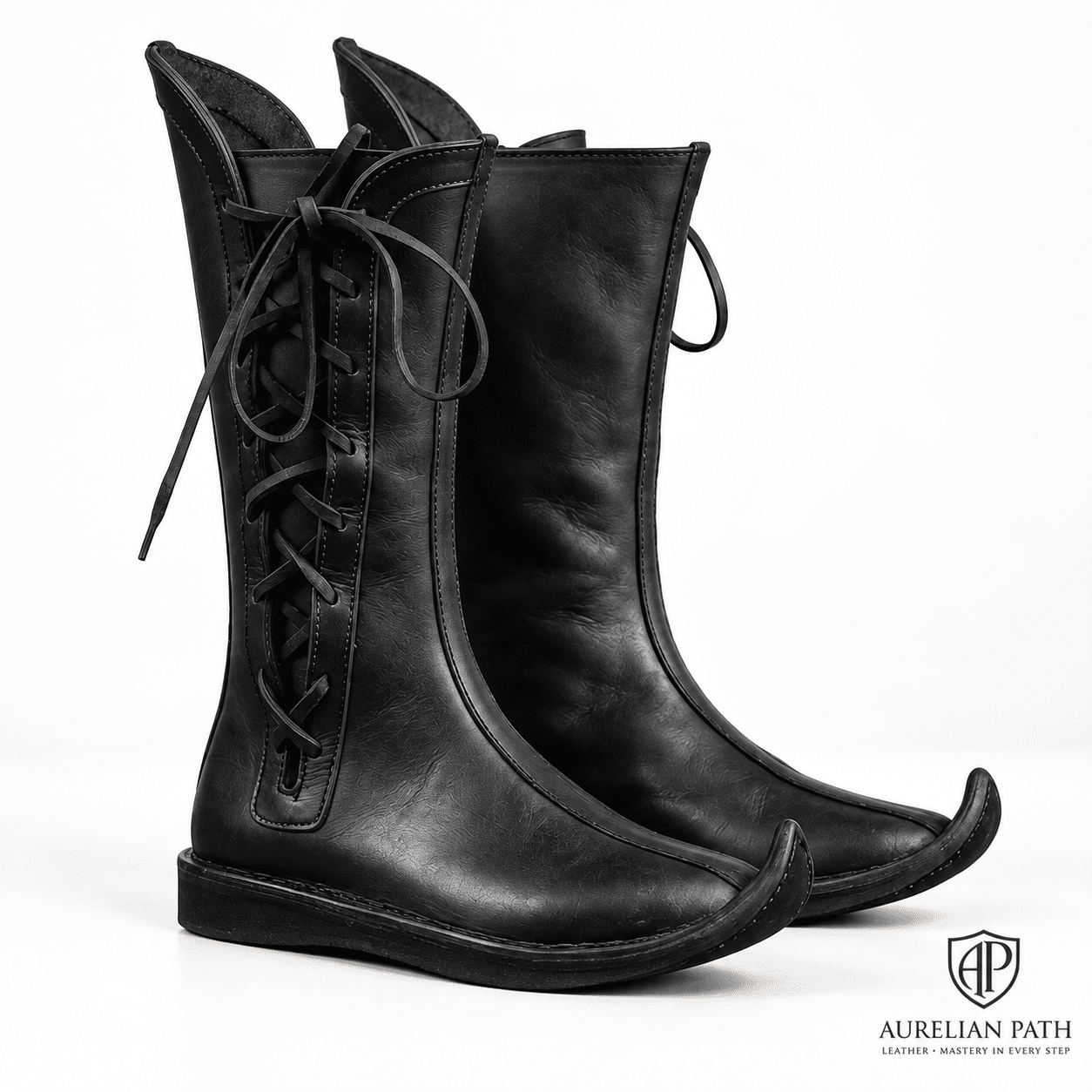
Medieval boots for wide feet need enough room across the forefoot without leaving the heel or overall length excessively loose. Choosing a larger number is not always the answer. Compare length, width, instep and toe shape separately, then ask the seller whether the exact design can accommodate your measurements.
A wide foot and a wide calf are different fitting needs. You may have one, both or neither. This checklist helps you explain the issue before ordering Ren Faire and LARP Leather Boots, especially when buying for a fixed event date.
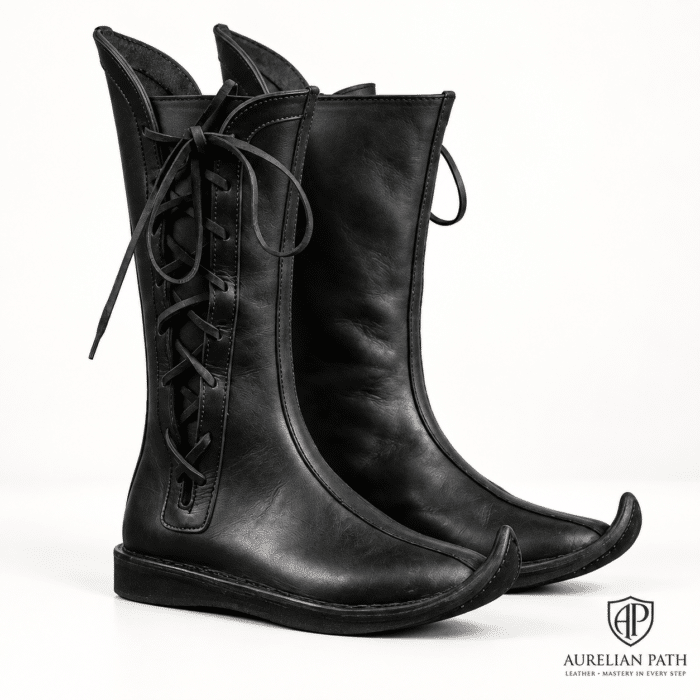
How to choose medieval boots for wide feet
1. Measure both feet in your event socks
Follow the maker’s method and record both heel-to-toe lengths in centimeters. Measure the forefoot at its widest point and state whether the number is a straight width or a circumference. Those are different dimensions and cannot be substituted for one another.
Wear the socks you intend to use. If you need an insert, tell the seller before ordering because it changes the available internal space. Use the footwear measuring instructions rather than adding an arbitrary allowance.
2. Describe where ordinary boots feel tight
“Wide feet” can mean pressure at the ball, crowded toes or difficulty over a high instep. Tell the maker where the pressure occurs. A boot can fit across the forefoot yet remain difficult to put on because the opening or instep shape is unsuitable.
Include your usual brand and size as secondary context. Your measurements and fit description are more useful than a width letter on its own, because width labeling varies between manufacturers.
3. Ask about the toe shape
A long decorative toe may extend beyond your foot without providing useful width where your toes sit. Ask whether the usable toe box suits your foot shape. Do not choose a pointed silhouette solely because its overall length appears generous.
4. Avoid automatically going up a size
More length can introduce heel movement while leaving the same pressure across the forefoot. Ask whether a wider fitting or another design is available. If the seller recommends a different size, confirm the reason and the measurements it is intended to accommodate.
5. Check instep entry and closure adjustment
Laces or straps can adjust only within the limits of the construction. Ask how far the boot opens and whether the instep can be accommodated. An adjustable shaft does not prove that the foot section is wide.
6. Measure the calf independently
For taller boots, record the leg circumference at the actual shaft height over the intended clothing. See our wide-calf medieval boots guide for this separate measurement. Do not assume that custom calf room changes the width of the sole.
7. Confirm the order details in writing
Ask which size or custom specification is being supplied, whether an extra charge applies and what return terms apply to that choice. A wide-fit request is not confirmed until the seller accepts the measurements and explains the available option.
Women’s wide-fit medieval boots
Women should use the chart for the actual listing and confirm which sizing system the selector uses. A generic conversion from women’s to men’s US sizes does not account for width, instep or heel shape. Send foot measurements and ask the seller to recommend a size for that model.
Our medieval boot sizing guide explains how to collect the relevant information. For costume ideas, see the women’s medieval ranger boots guide after resolving fit.
A message you can send before ordering
I am interested in this boot for an event on [date]. My left/right foot lengths are [cm], and widths measured using your instructions are [cm]. My usual footwear feels tight at [location]. I plan to wear [socks/inserts]. My calf measurement at the required shaft height is [cm]. Can this model accommodate these measurements, and what size or custom option do you recommend?
Check the fit when the boots arrive
Try both boots on a clean indoor surface while preserving return eligibility. Check toe movement, heel security and pressure across the instep. Read how to break in medieval leather boots for gradual preparation. Breaking in should not be used to force a painfully narrow boot into a suitable fit.
Frequently asked questions
Does soft leather guarantee a wide fit?
No. Softness does not change the underlying sole width or guarantee adequate internal volume.
Can I order EEE or EEEE directly?
Ask about the exact model and provide measurements. Availability, labels and pricing need confirmation; do not assume every design offers those widths.
Should I buy shoes instead?
Lower medieval shoes remove the calf-fitting question but still need adequate forefoot room. Compare their measurements separately.
Handmade historical footwear
Found the Style You Want?
Explore the current footwear collections and check your measurements before choosing a size.
Keep reading
 Ren Faire Boots Order-By Calendar: Plan Your Event Season
 Medieval Boots for Cosplay: 7 Things to Check Before Buying